

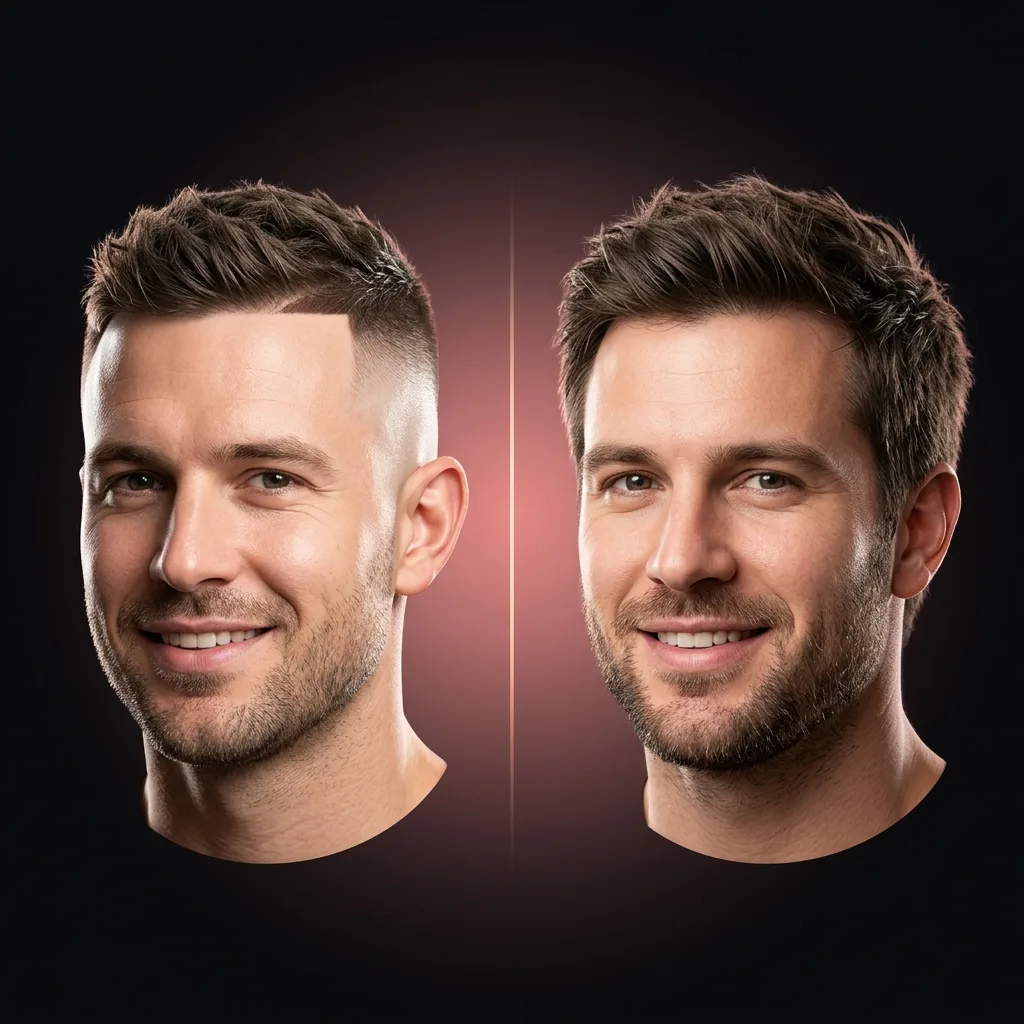
Fade vs Taper: What's the Difference and Which Suits You?
Last updated: April 2026
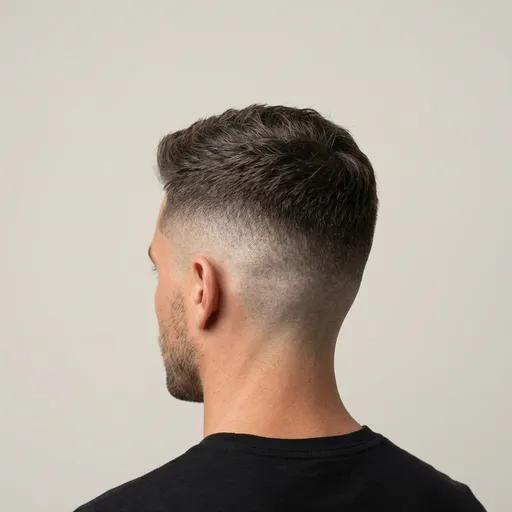
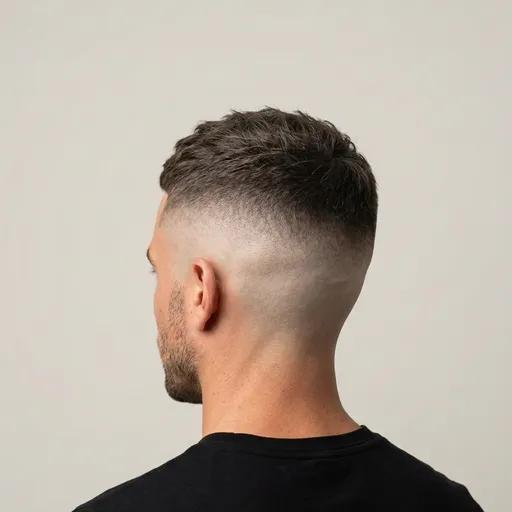
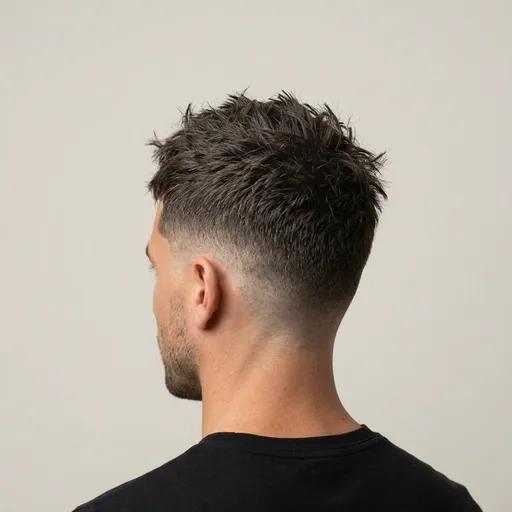
A fade cuts hair down to the skin for a sharp, high-contrast gradient — a taper gradually shortens hair without ever reaching skin, creating a subtler blend. Fades need trimming every 2.5 weeks on average; tapers last up to 3.5. Both work on most face shapes, but fades create stronger visual effects: 100% of fade styles slim the sides, versus near-zero for tapers.
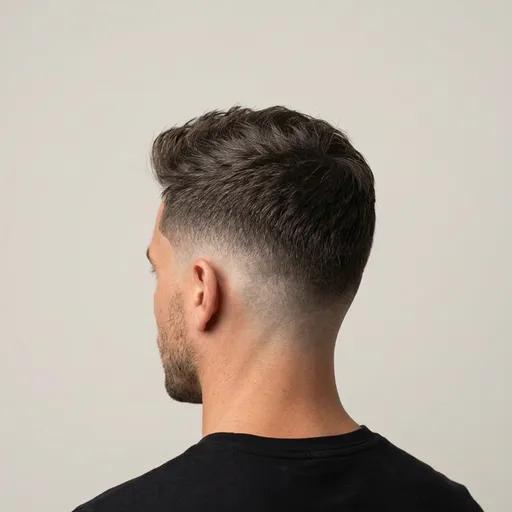
Fade
Mid Fade
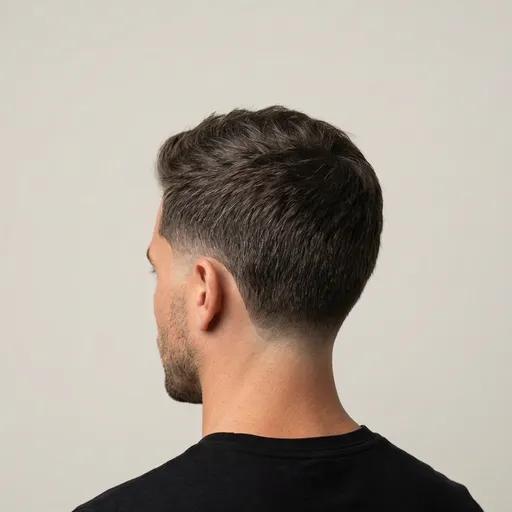
Taper
Taper Fade
Fade vs Taper: Side-by-Side Comparison
| Attribute | Fade | Taper |
|---|---|---|
| Shortest length | Skin / #0 guard (fully bald at shortest) | #1-2 guard (hair always remains visible) |
| Gradient style | Dramatic, high-contrast transition | Gradual, subtle blend |
| Avg. trim cycle | Every 2.5 weeks | Every 3.5 weeks |
| Sides slimming | 100% of styles slim sides | Minimal — preserves natural head shape |
| Adds height | 75% of styles add vertical emphasis | No significant height addition |
| Best face shapes | Oval, Round, Square | Oval, Heart, Oblong |
| Hair types | 11 types (1B, 1C, 2A, 2B…) | 8 types (1B, 1C, 2A, 2B, 3B, 3C, 4A, 4B) |
| Formality | Edgy to moderate (varies by type) | Conservative to business-casual |
| Grow-out | Visible regrowth within 1 week | Blends naturally for 2-3 weeks |
Data computed from 10 v2 catalog styles with structured metadata
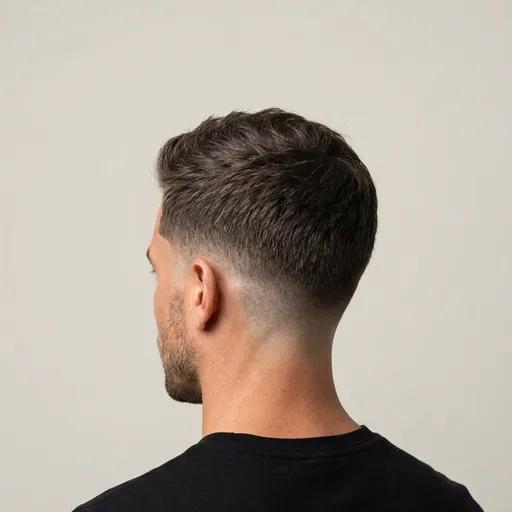
When to Choose a Fade
Fades are the right call when you want maximum contrast and a clean, defined silhouette. 8 of 8 fade styles in our catalog slim the sides, and 6 add vertical height — making fades the top choice for men who want their face to look leaner and more angular.
Round or wide face
6 of 8 fade styles score "excellent" for round faces. The side-slimming effect counteracts the equal width-to-length ratio.
You like frequent barber visits
Fades average a trim every 2.5 weeks. If you enjoy the ritual and want to stay sharp, this works in your favor.
Bold, modern style
Skin fades and high fades make a statement. They pair well with beards, textured tops, and streetwear aesthetics.
Textured or curly hair
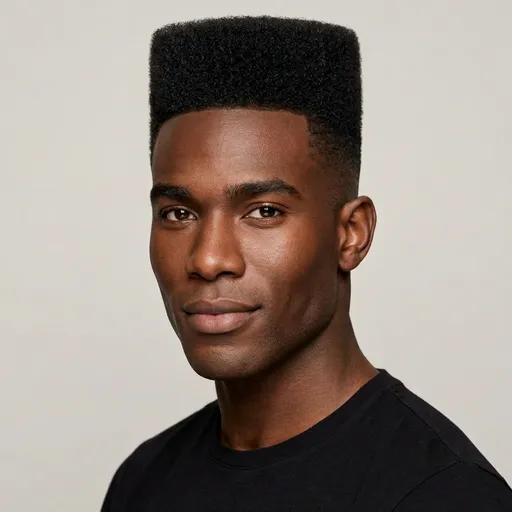
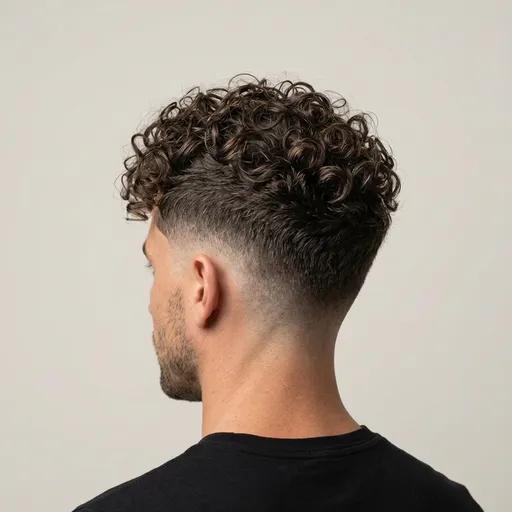
Fades excel with texture — the contrast between tight sides and a voluminous top is amplified. Styles like Fade + Curly Top and High Top Fade are built for types 2C-4C.
When to Choose a Taper
Tapers are ideal when you want a clean, polished look that doesn't scream “just got a haircut”. The gradual blend preserves your natural head shape and grows out gracefully — the taper fade in our catalog only needs a trim every 3.5 weeks, nearly double the fade average.
Professional or conservative setting
Tapers are the safest choice for corporate environments. The transition is subtle enough that it reads as "well-groomed" rather than "styled."
Oval, heart, or oblong face
These three shapes are the best matches for tapers. The natural silhouette doesn't alter facial proportions — it refines them.
Low-maintenance preference
At 3.5 weeks between trims, tapers are significantly easier to maintain. No harsh grow-out lines to worry about.
First time going short on the sides
If you've never had short sides before, a taper is a comfortable entry point. You can always go shorter later with a fade.
Best Face Shapes for Fades
Fades are most effective on face shapes that benefit from side slimming and vertical emphasis. Here's how our 8 fade styles break down:
oval face
7/8 stylesround face
6/8 stylessquare face
5/8 stylesdiamond face
3/8 stylesoblong face
1/8 stylesheart face
1/8 stylesrectangle face
1/8 stylesRound faces are the biggest beneficiaries — 6 styles score “excellent” because fades aggressively slim the sides (100% of fades) and add height (75%), creating the illusion of a longer, leaner face. Oval faces suit nearly every fade type, while diamond faces benefit from the width reduction that emphasizes cheekbones.
Best Face Shapes for Tapers
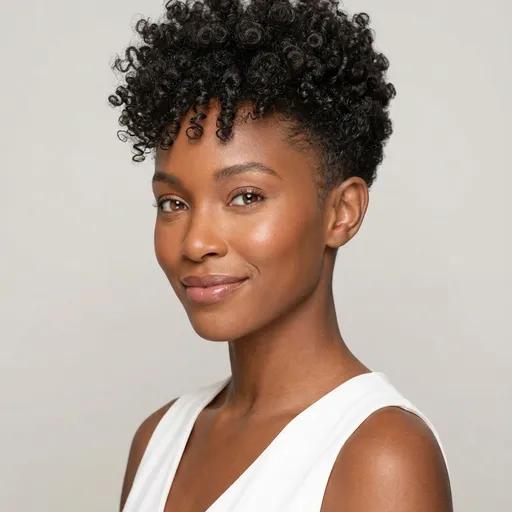
Tapers complement face shapes that don't need aggressive correction — they refine rather than reshape. The classic taper fade works best with oval, heart, and oblong faces, while the curly tapered cut excels on round, oval, and square shapes by leveraging curl volume for subtle height.
Because tapers preserve the natural head shape instead of dramatically reshaping it, they're the most versatile option. Our taper fade has no face shapes in the “avoid” category — it's a safe choice for any face shape. Compare that to high fades, which don't work well for oblong or rectangular faces because they add too much vertical emphasis. Still torn between the two? Our hairstyle app for men renders both — and 53 other men's cuts — on your own photo, which ends most fade-vs-taper debates in about a minute.
All 8 Fade Styles Compared
Every fade in our catalog with real metadata from our AI analysis
| Style | Best faces | Upkeep | Visual effect | Hair types |
|---|---|---|---|---|
| Mid Fade | round, oval, diamond | medium (2wk) | Slims sides, Adds height, Elongates face, Defines jaw | 1B, 1C, 2A |
| Skin Fade | round, oval, oblong | high (2wk) | Slims sides, Defines jaw | 1B, 1C, 2A |
| High Fade | round, oval, diamond | medium (2wk) | Slims sides, Adds height, Elongates face, Defines jaw | 1B, 1C, 2A |
| High Top Fade | round, square, diamond | medium (2wk) | Slims sides, Adds height, Elongates face, Defines jaw | 3C, 4A, 4B |
| Fade + Textured Crop | oval, square, heart | low (3wk) | Slims sides, Defines jaw | 1B, 1C, 2A |
| Fade + Curly Top | oval, square, rectangle | medium (3wk) | Slims sides, Adds height, Defines jaw | 2C, 3A, 3B |
| Low Fade | round, square, oval | low (3wk) | Slims sides, Adds height, Defines jaw | 1B, 1C, 2A |
| Twists with Fade | round, oval, square | medium (3wk) | Slims sides, Adds height, Elongates face, Defines jaw | 4A, 4B, 4C |
Can't Decide? Try Both on Your Face
Upload a selfie and see how each fade and taper actually looks on you — photorealistic AI preview in 30 seconds.
Join 50,000+ people who found their perfect hairstyle

Taper Styles to Try On
Quick Decision Guide
Get a fade if you…
- +Want a bold, defined look
- +Have a round or wide face
- +Don't mind trims every 2.5 weeks
- +Like high contrast between top and sides
- +Want to pair it with a beard or textured top
Get a taper if you…
- +Prefer a subtle, natural look
- +Work in a conservative environment
- +Want trims only every 3.5 weeks
- +Are going short on the sides for the first time
- +Have an oval, heart, or oblong face
Read every comparison you want — the fastest answer is seeing both on your own head. Upload one selfie to the find the best haircut for your face with AI and get your 4 best matches in about 30 seconds — free.
Frequently Asked Questions
What is the main difference between a fade and a taper?
A fade transitions hair from very short (often skin) to longer hair on top with a dramatic gradient, while a taper gradually shortens hair toward the neckline and ears without ever reaching skin. Based on our analysis of 10 styles, fades average 2.5-week upkeep cycles compared to 3.5 weeks for tapers — the sharper contrast of a fade grows out faster and becomes visible sooner. Fades are bolder and more defined; tapers are subtle and conservative. Both work with most face shapes, but fades create stronger visual effects like slimming the sides and adding height.
Is a taper or fade better for a round face?
Fades are generally better for round faces. 6 of our 8 fade styles score "excellent" for round faces because they aggressively slim the sides — 100% of fades create a side-slimming effect. A mid fade or high fade adds vertical emphasis that elongates a round face. Tapers work too, but the effect is subtler. If you want maximum face-slimming impact, go with a fade. If you want a natural, understated look, a taper still complements round faces well.
Which lasts longer between trims — a fade or a taper?
Tapers last significantly longer. Our data shows tapers average 3.5 weeks between trims, while fades average 2.5 weeks. Skin fades and high fades need the most frequent maintenance at 2 weeks because any regrowth is immediately visible against the skin. Tapers grow out more gracefully since there's no harsh contrast line to maintain. If you want a low-maintenance cut, a taper fade with a 4-week upkeep cycle is your best bet.
Can I get a fade if I have curly or coily hair?
Yes — several fade styles are specifically designed for textured hair. Our Fade + Curly Top works best with type 2C-3C hair, and the High Top Fade is built for type 3C-4C coily hair. Curly and coily textures actually enhance fades by creating natural contrast between the tight sides and voluminous top. For tapers, the Curly Tapered Cut works best with 3B-4B hair types. The key is finding a barber experienced with your specific curl pattern.
Are fades appropriate for professional settings?
It depends on the type. Low fades and fade textured crops are widely accepted in corporate environments — they look clean without being extreme. Skin fades and high fades are bolder and may draw more attention. Tapers are the safest choice for conservative workplaces because the gradient is so subtle it's barely noticeable. If you're unsure, start with a taper or low fade and go shorter gradually. Many professionals opt for a taper during the week and get it faded for weekends.
What does a barber mean by "low," "mid," and "high" fade?
These terms refer to where the shortest point of the fade begins on your head. A low fade starts just above the ears (about 1 inch up), a mid fade starts at the temple line (roughly mid-ear), and a high fade starts above the temples (upper third of the sides). Higher fades create more contrast and a more dramatic look. A taper, by contrast, has no specific "start point" — it's a gradual all-over reduction. Each level suits different face shapes: our data shows high fades work best for round and oval faces, while mid fades suit the widest range of shapes.
Can I try a fade or taper on my photo before getting one?
Yes — HaircutAI lets you upload a selfie and try on any of our 10 fade and taper styles instantly. The AI analyzes your face shape, applies the hairstyle to your actual photo, and generates a photorealistic preview in about 30 seconds. You can compare a skin fade, mid fade, low fade, and classic taper side by side on your own face before committing. It's free to try and takes less than a minute.
Related Guides
See the Difference on Your Own Face
Upload a selfie, try any fade or taper from our catalog, and get a photorealistic preview in 30 seconds. No commitment, no salon visit required.