

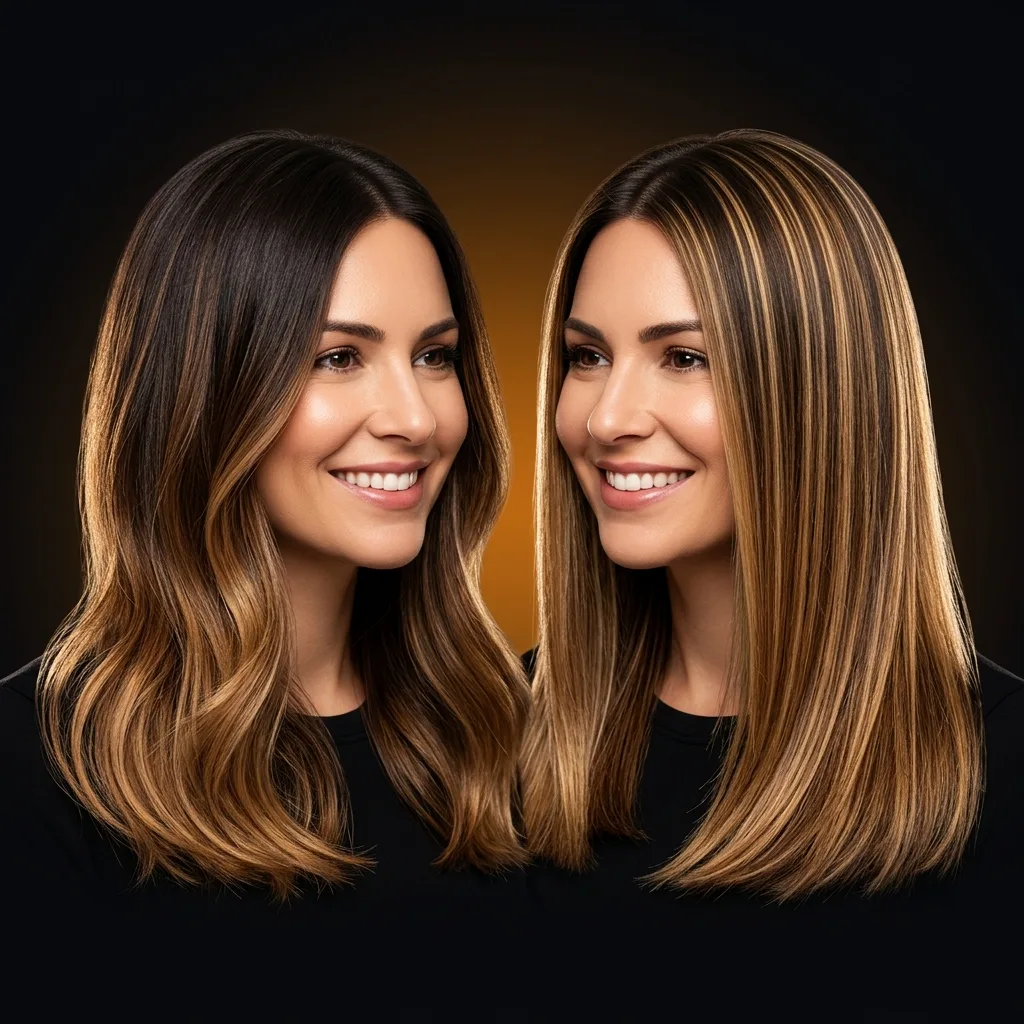
Balayage vs Highlights: Which Hair Color Technique Is Right for You?
Last updated: April 2026
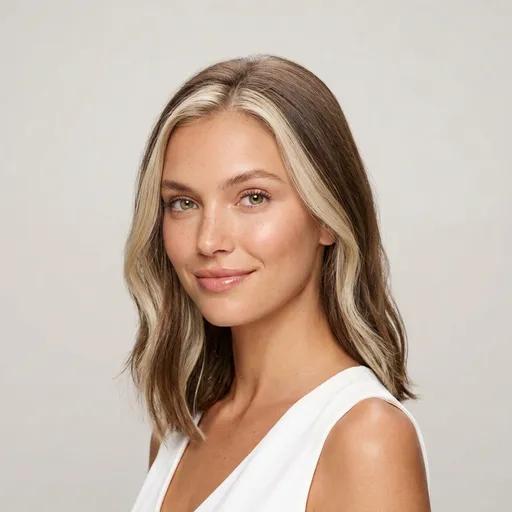
Balayage is hand-painted onto the hair surface for a soft, sun-kissed gradient with no harsh root line — highlights use foils to create even, uniform brightness from root to tip. Balayage averages 13-week touch-ups; highlights need refreshing every 8 weeks. Both cost $$$ at the salon, but balayage's seamless grow-out means 3 fewer annual visits.
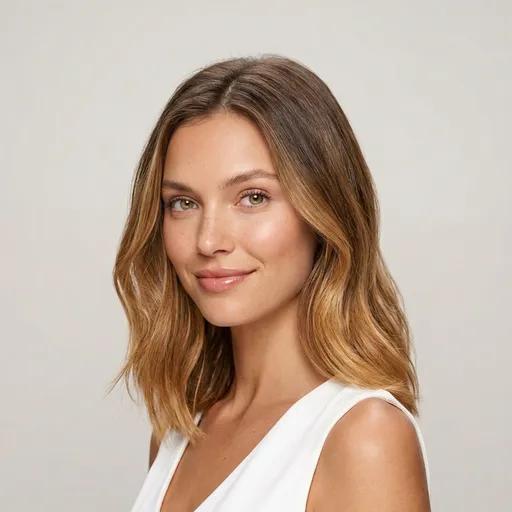
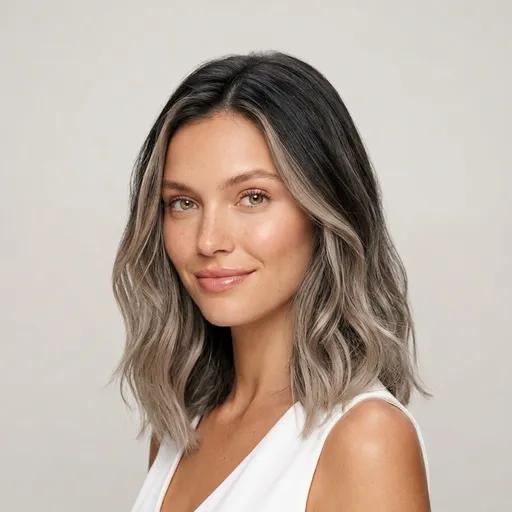
Balayage
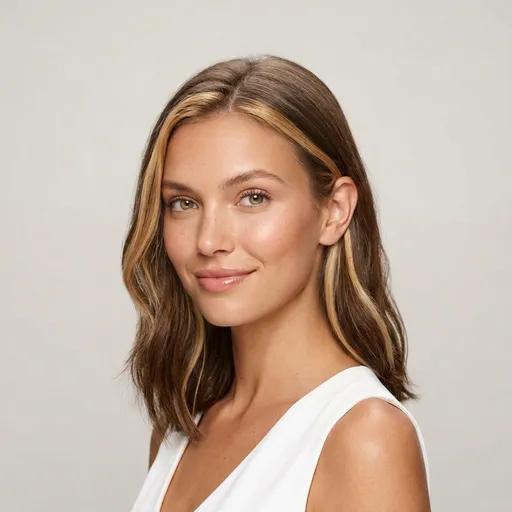
Honey Balayage
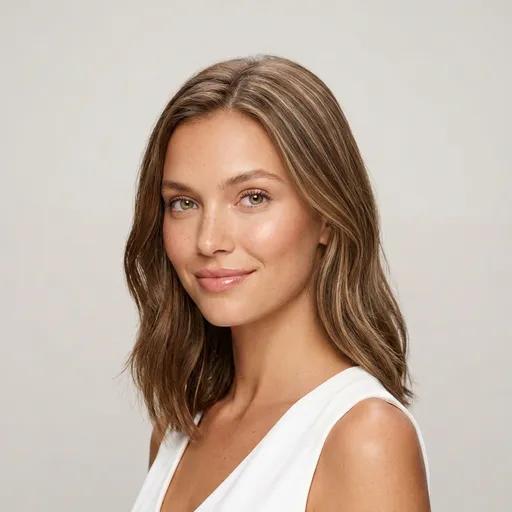
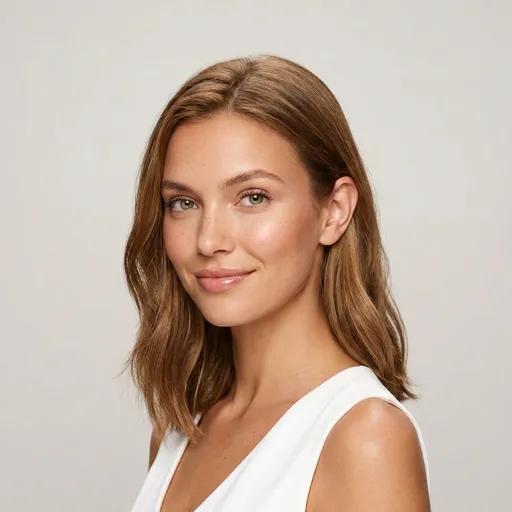
Highlights
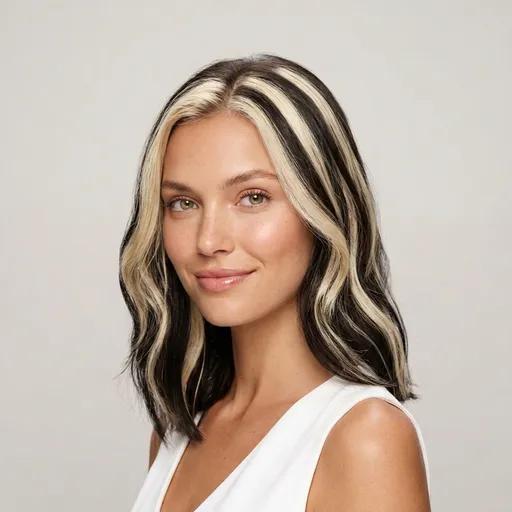
Classic Highlights
Balayage vs Highlights: Side-by-Side Comparison
| Attribute | Balayage | Highlights |
|---|---|---|
| Technique | Freehand painting (no foils) | Foil-wrapped woven sections |
| Result | Soft, graduated sun-kissed gradient | Even, uniform brightness throughout |
| Root line | No harsh root line — seamless grow-out | Visible root band as hair grows |
| Avg. touch-up cycle | Every 13 weeks | Every 8 weeks |
| Maintenance level | 2/3 styles rated "low" | 0/3 styles rated "low" |
| Damage potential | Medium (surface-only application) | Medium-High (full strand saturation + foil heat) |
| Best skin tones | Medium, Olive, Tan | Light, Medium, Fair |
| Best undertone | Warm or cool (depends on variant) | Warm or neutral |
| Cost | $$$ (longer application time) | $$–$$$ (varies by coverage) |
Data from 6 v2 catalog color techniques with structured metadata
All 6 techniques in our catalog
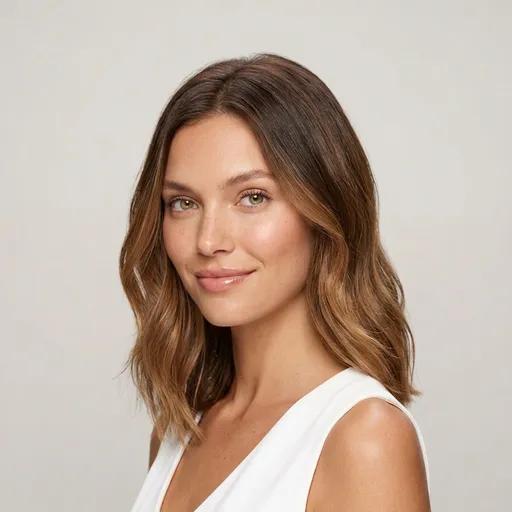
When to Choose Balayage
Balayage is the right pick when you want low-maintenance color that looks like you spent a summer in the sun. 2 of 3 balayage styles in our catalog score “low maintenance” — and with 13-week touch-up cycles, you'll visit the salon roughly 4 times per year instead of 7 with highlights.
You want a natural, lived-in look
Balayage mimics the way sun naturally lightens hair — concentrated at the ends and face frame, darker at the roots. There's no "I just left the salon" moment because it always looks effortless.
Dark or brunette base hair
Caramel and honey balayage are specifically designed for medium-to-dark bases. The hand-painted gradient creates dimension without the "stripy" contrast that foil highlights can produce on dark hair.
Medium, olive, or tan skin tone
3/3 balayage styles score "best" for medium skin, and 2/3 for olive. Warm balayage tones brighten the complexion and create a sun-kissed glow.
Minimal salon visits
At 13 weeks between touch-ups, balayage requires roughly half the salon visits of highlights. The seamless root transition means you can push appointments further without looking "overdue."
When to Choose Highlights
Highlights are better when you want all-over brightness and uniform lift rather than a graduated effect. Classic highlights — the Jennifer Aniston signature — create multi-tonal dimension that lights up the entire head. They require more upkeep (8-week cycles) but deliver a brighter, more polished result.
You want maximum brightness
Classic highlights lift strands from root to tip, creating consistent all-over lightness. The foil technique allows precise, even saturation that balayage can't match for sheer brightness.
Fair or light skin tone
2/3 highlight styles score "best" for fair skin. Golden and warm-blonde highlights complement lighter complexions beautifully, creating a classic sun-lit effect.
You want strategic face framing
Face-framing highlights brighten just the front sections — lower commitment than full highlights, lower damage (rated "low" in our catalog), and still creates a noticeable face-brightening effect. The lowest-risk option if you're new to coloring.
Statement or retro looks
Chunky highlights deliver the bold Y2K-revival pattern — graphic, high-contrast, unapologetically stripy. A trend that keeps cycling back and demands the precision that only foils provide.
Best Skin Tones for Each Technique
Your skin tone and undertone matter more than your current hair color when choosing between balayage and highlights. Here's how each style maps to skin tones in our catalog:
Balayage
Best skin tones across 3 styles
Highlights
Best skin tones across 3 styles
Key takeaway: Balayage covers a wider skin tone range — caramel balayage is one of the few coloring techniques that scores “best” for dark and deep skin tones. Highlights skew lighter, with fair and light skin being the strongest match. If you have warm undertones, honey balayage or golden highlights will brighten your complexion. For cool undertones, ash balayage is the standout choice — it cools the complexion and reduces redness.
All 6 Techniques Compared
Every balayage and highlight style with real catalog metadata
| Style | Touch-up | Damage | Best skin tones | Tone |
|---|---|---|---|---|
| Honey Balayage | 14wk | medium | Medium, Olive, Tan | Warm |
| Caramel Balayage | 14wk | medium | Medium, Olive, Tan | Warm |
| Ash Balayage | 12wk | medium_high | Fair, Light, Medium | Cool |
| Classic Highlights | 8wk | medium | Fair, Light, Medium | Warm |
| Face-Framing Highlights | 8wk | low | Light, Medium, Olive | Warm |
| Chunky Highlights | 8wk | medium_high | Fair, Light, Medium | Neutral |
Can't Decide? Try Both on Your Hair
Upload a selfie and see how balayage and highlights actually look on your hair — photorealistic AI color preview in 30 seconds.
Join 50,000+ people who found their perfect hair color
Quick Decision Guide
Get balayage if you…
- +Want a natural, sun-kissed look
- +Prefer 13-week touch-up cycles
- +Have dark or brunette base hair
- +Have medium, olive, or tan skin
- +Want minimal visible grow-out
Get highlights if you…
- +Want all-over brightness and lift
- +Are okay with 8-week salon visits
- +Have fair or light skin
- +Want a classic, polished look
- +Want the Y2K chunky trend look
Other Coloring Techniques to Consider
If neither balayage nor highlights feels quite right, these related techniques might be your match — or skip the shortlist entirely and audition all 48 shades and techniques on one photo with the AI hair color changer:
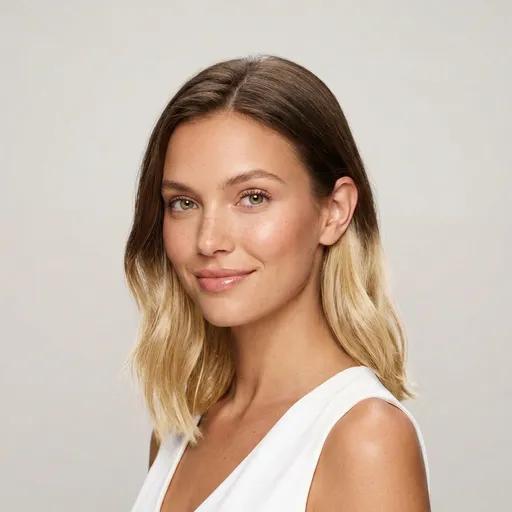
Still torn between the two techniques? Your coloring and face decide better than any article. Upload one selfie to the see which hairstyle suits you with AI and get your 4 best matches in about 30 seconds — free.
Frequently Asked Questions
What is the main difference between balayage and highlights?
Balayage is a freehand painting technique where color is swept onto the hair surface for a graduated, sun-kissed effect — highlights use foils to isolate strands and lift them uniformly from root to tip. The result: balayage creates a soft, blended gradient with no harsh root line, while highlights produce even, consistent brightness throughout. Our data shows balayage averages 13-week touch-ups compared to 8 weeks for highlights, making balayage significantly lower maintenance. Both techniques require salon application and cost $$$, but balayage's seamless grow-out means fewer annual visits.
Which lasts longer between salon visits — balayage or highlights?
Balayage lasts nearly twice as long. Our catalog data shows balayage averages 13 weeks between touch-ups, while highlights average 8 weeks. The reason: balayage is painted without foils, so there's no sharp root line when hair grows out. Highlights are placed from the root in foils, creating a visible dark band as they grow. If you want to minimize salon visits, balayage is the clear winner — 2 of 3 balayage styles in our catalog score "low maintenance."
Is balayage or highlights more damaging to hair?
Highlights are generally more damaging because every strand is fully saturated with lightener and wrapped in foil (which creates heat). Balayage paints color on the surface only, leaving the inner strand less processed. Our highlight styles show medium to medium-high damage potential, while 0 of 3 balayage styles have "varies" for bleaching — your stylist can customize the lift level. That said, ash balayage requires bleaching and carries medium-high damage potential. The gentlest option in our catalog is face-framing highlights (low damage) since only the front sections are treated.
Which is better for dark hair — balayage or highlights?
Balayage is typically better for dark hair because the hand-painted gradient creates a more natural-looking transition from your dark base. Caramel balayage is specifically designed for medium-to-deep skin and dark hair, creating warm toffee dimension without the "stripy" look that foil highlights can produce on dark bases. Chunky highlights on dark hair create a high-contrast, graphic effect (the Y2K look) — dramatic but deliberate. If you want subtle dimension on dark hair, go balayage. If you want bold contrast, chunky highlights.
What skin tone suits balayage vs highlights?
Balayage works across a wider skin tone range because the technique is customizable. Honey balayage flatters medium, olive, and tan skin with warm undertones. Caramel balayage extends to dark and deep skin tones. Ash balayage suits fair-to-medium skin with cool undertones. Highlights work best on fair, light, and medium skin — classic highlights are warmest and most universally flattering, while face-framing highlights suit the widest range including dark skin. The key factor is undertone: warm undertones pair with warm-toned balayage or golden highlights; cool undertones pair with ash balayage or neutral chunky highlights.
Can I get balayage on short hair?
Yes, but the effect is more subtle. Balayage relies on a visible gradient from dark roots to lighter ends — on very short hair, there's less length for that transition to develop. Shoulder-length and longer hair shows balayage best. For short hair, face-framing highlights or money pieces often create more impact because they place color strategically at the front rather than relying on a long gradient. Your stylist can adapt either technique to your length.
Can I try balayage or highlights on my photo before committing?
Yes — HaircutAI lets you upload a selfie and try on any of our 6 balayage and highlight styles instantly. The AI applies the color to your actual hair in the photo and generates a photorealistic preview in about 30 seconds. You can compare honey balayage, ash balayage, classic highlights, and face-framing highlights side by side on your own face before booking a salon appointment. It's free and takes less than a minute.
Related Guides
See the Difference on Your Own Hair
Upload a selfie, try any balayage or highlight from our catalog, and get a photorealistic color preview in 30 seconds. No commitment, no salon visit required.