

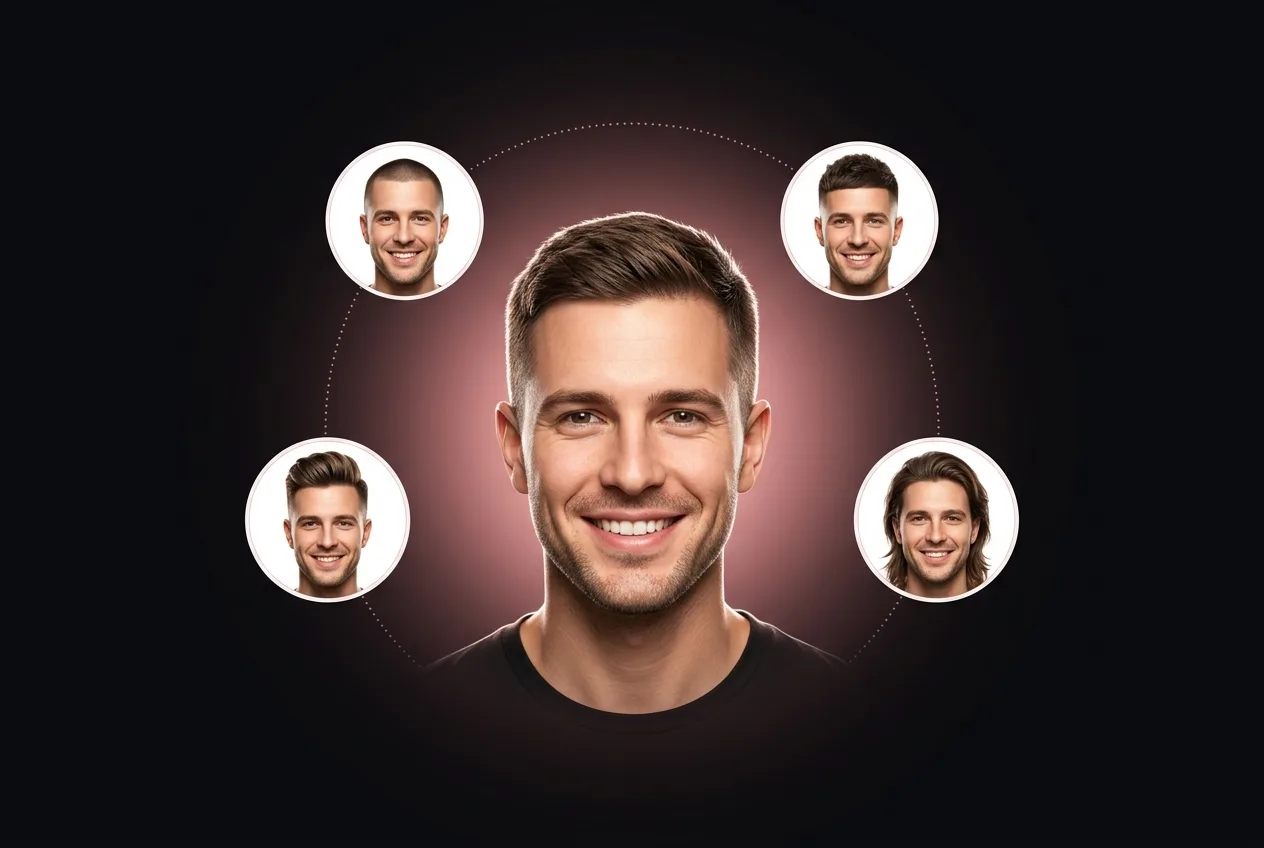
Haircut Simulator: See the Cut on Your Head Before the Barber Does
A haircut grows back in months; the simulation takes seconds. Upload one photo and HaircutAI renders real cuts on your own head — 55 men's styles from a taper fade to a modern mullet, each scored against your face shape first, so you're not just browsing hair, you're shortlisting cuts that measurably fit your proportions.
The Barbershop Translation Problem
"Short on the sides, a bit longer on top" produces a different haircut in every chair — it's a description, and descriptions get interpreted. The two ways out are a reference photo of someone else (whose hairline, density, and face shape aren't yours) or a simulation of the cut on your own head. One of these survives contact with reality.
The simulator also fixes the browsing problem: scrolling 55 cuts tells you what looks good on the model. Scoring them against your measured face shape first — 38 of the 55 are tagged jawline-defining, 29 slim the sides, 24 add height — tells you what will look good on you, before a single render. That order matters: shortlist by geometry, then simulate the shortlist.
Not "a Fade" — the Right Fade: All 5 Heights Compared
Fade height changes the verdict for your face shape — a mid fade flatters a round face and is tagged "avoid" for a long one. The library carries 9 fade and taper variants; here are the five core heights and what the compatibility data says about each:
| Fade | Where it starts | Best face shapes | Trim cycle | The read |
|---|---|---|---|---|
| Low fade | Just above the ears | Round, square, oval | ~3 weeks | The conservative entry — keeps side volume, works with every dress code. |
| Mid fade | At the temples | Round, oval, diamond | ~2 weeks | The default modern fade; adds height and elongates. Tagged "avoid" for oblong faces. |
| High fade | Near the crown line | Round, oval, diamond | ~2 weeks | Maximum contrast and height — tagged "avoid" for oblong and rectangular faces. |
| Skin fade | Down to bare skin | Round, oval, oblong | ~2 weeks, high upkeep | The sharpest finish and the most demanding chair schedule in the family. |
| Taper fade | Neckline & sideburns only | Oval, heart, oblong | ~4 weeks | The lowest-commitment fade — a cleanup, not a statement, and the easiest grow-out. |
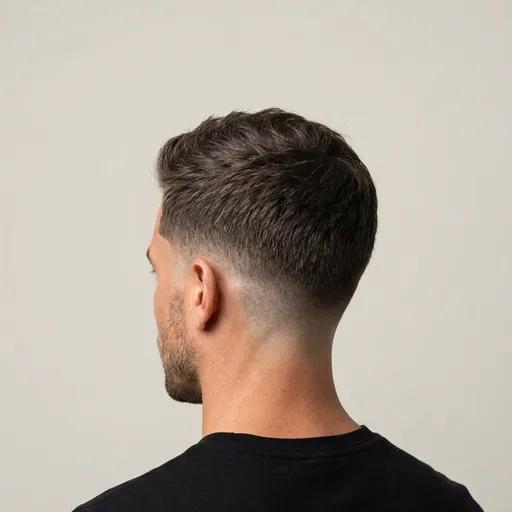
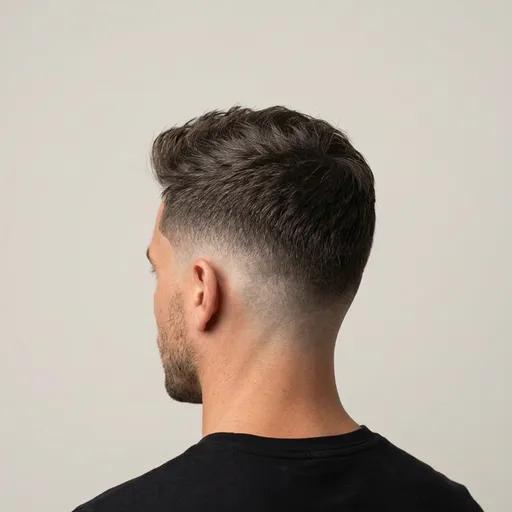
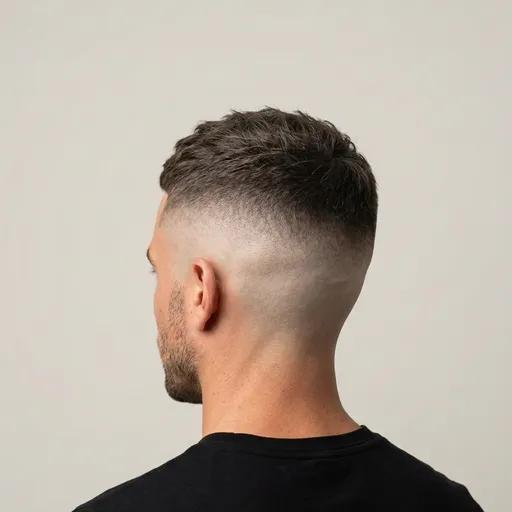
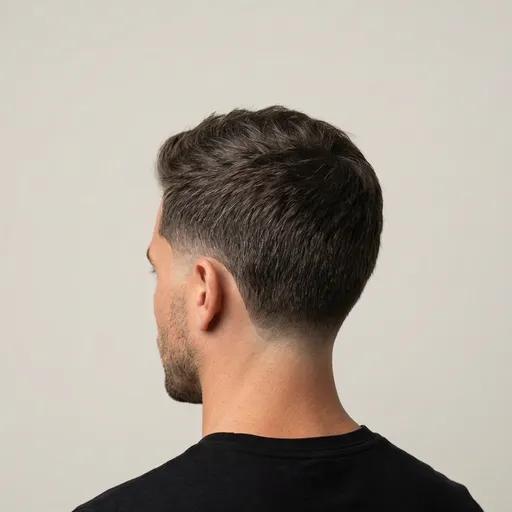
Still deciding between the two families? The full breakdown is in fade vs taper.
What Your Face Shape Does to the Shortlist
Every one of the 55 men's cuts carries face-shape compatibility data. Here's how many score "best" per shape — this is the filter the simulator applies to your photo before you browse anything:
Oval
of 55 cuts score "best"
Round
of 55 cuts score "best"
Square
of 55 cuts score "best"
Heart
of 55 cuts score "best"
Oblong
of 55 cuts score "best"
Diamond
of 55 cuts score "best"
Maintenance is in the data too: 22 of 55 cuts are low-upkeep, and the men's catalog averages a 3.8-week trim cycle — tighter than women's cuts, because fades grow out fast. Don't know your face shape? The free AI hairstyle analysis measures it from your photo, or read the face shape guide.
How the Haircut Simulator Works
Upload one photo
A clear, front-facing photo is all it needs — no measurements, no questionnaire, no scrolling through cuts blind.
Get your face shape scored, free
The AI reads 68 facial points, classifies your shape, and scores all 55 men’s cuts against it — so the shortlist is yours, not the model’s.
Simulate the shortlist
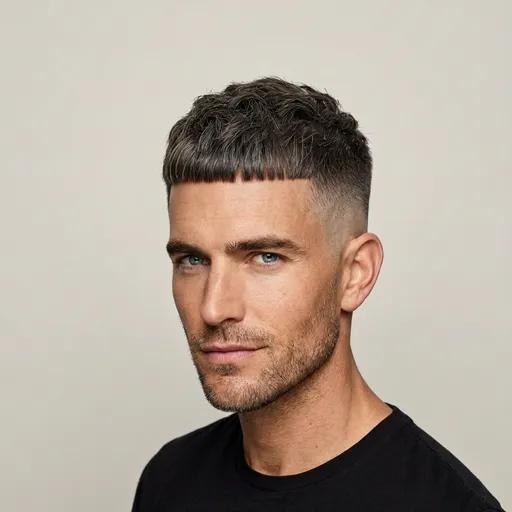
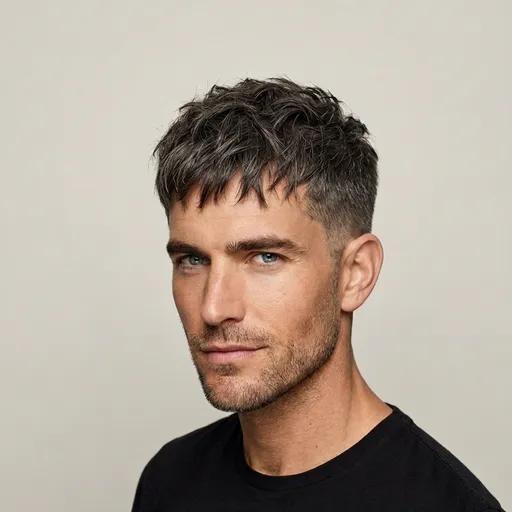
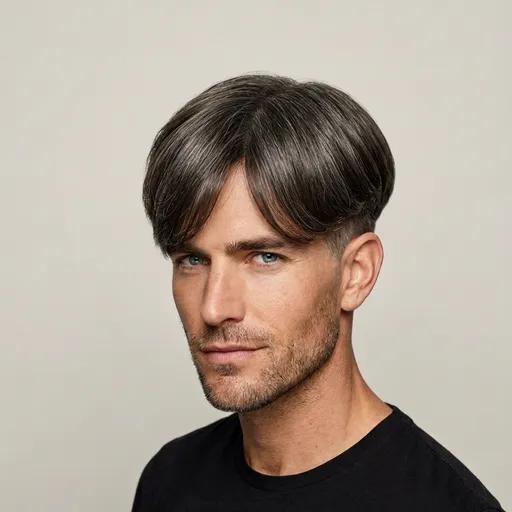
Render any cut on your own head — your face, your skin tone, your lighting. Save the winner and show your barber the outcome instead of describing it.
What a Simulator Can't Simulate
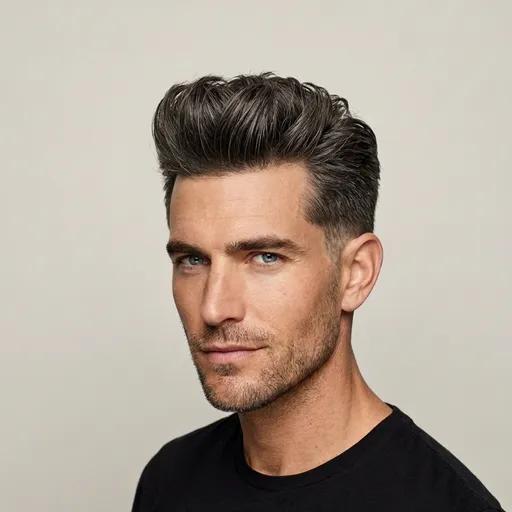
A simulation shows the cut on its best day — freshly done, styled, front-on. It can't feel your crown's growth pattern, a strong cowlick, or how fast your neckline gets scruffy, and it won't style itself at 7am. If a cut needs daily product to hold its shape (quiffs and pompadours do; crops and buzz cuts don't), that's a maintenance decision the render can't make for you — though the per-cut upkeep data gets you close.
And a simulator is not a barber: it tells you the what, your barber owns the how — guard lengths, blend lines, how your density handles the top. The best use of the tool is walking in with the render and letting the chair translate it to your head. That conversation goes from five minutes of description-roulette to ten seconds of "this, exactly."
Looking for women's styles instead? The same engine covers all 134 cuts — start from the AI hairstyle recommender, see yourself with bangs, or try styles on your photo directly.
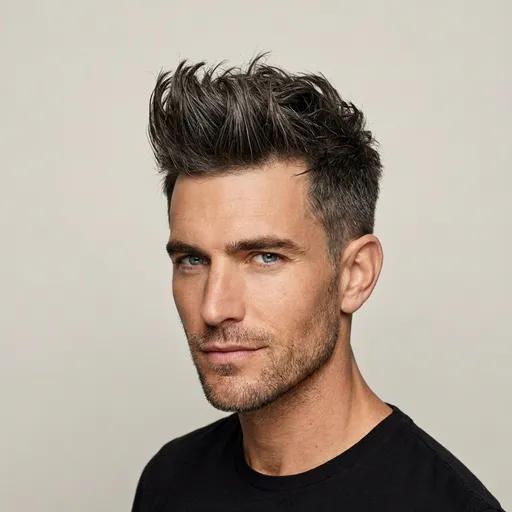
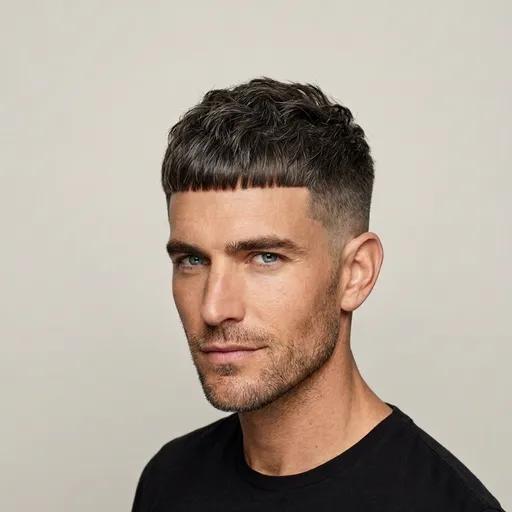
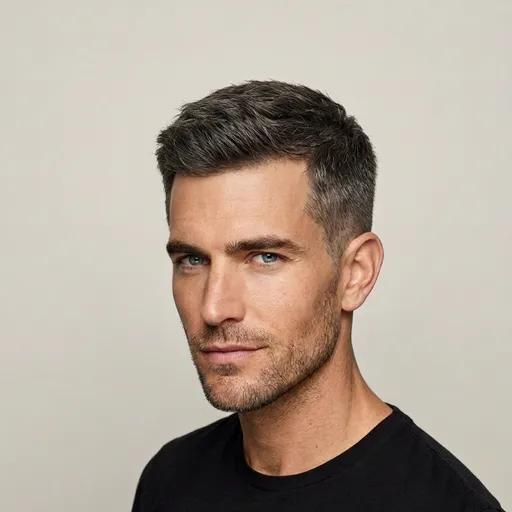
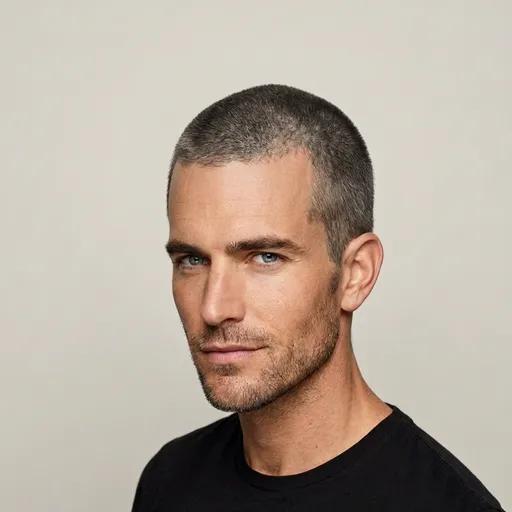
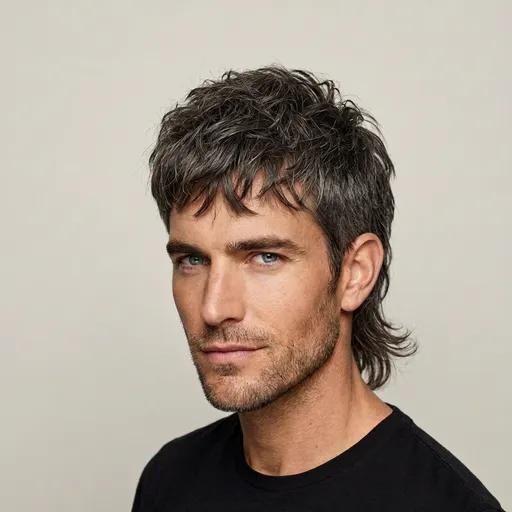
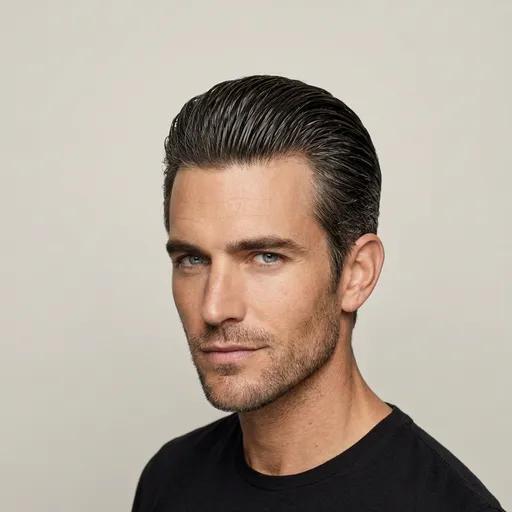
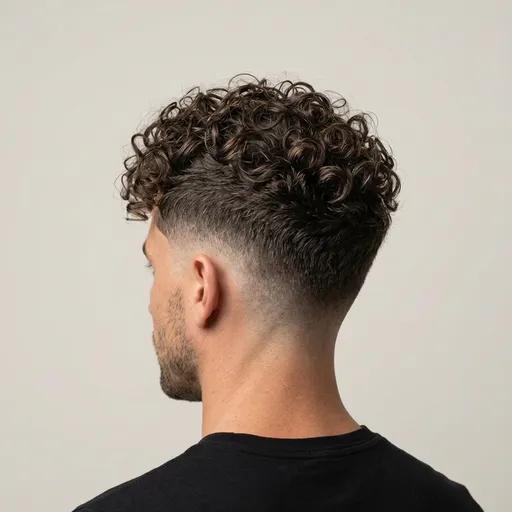
16 of the 55 Cuts You Can Simulate
From the two-week skin fade to the shoulder-length flow — every style below renders on your own photo, and the full library covers 20 curly-first cuts, braids, locs, and waves:

Frequently Asked Questions
Is there a free haircut simulator that uses my own photo?
The face analysis half is free: upload one selfie and the AI classifies your face shape and tells you which of the 55 men's cuts score "best" for it — that report costs nothing. Simulating specific cuts rendered onto your own photo happens in the app. Unlike browser toys that paste a wig PNG over your head, each preview is a photo edit of your actual face, with your hairline and skin intact.
How does the haircut simulator work?
Three steps. You upload one clear, front-facing photo. The AI reads your face shape from 68 landmark points and scores all 55 men's cuts against it — so you know which fades and lengths flatter your proportions before you browse. Then you pick any cut, from a buzz cut to a modern mullet, and the AI renders it on your head: your face, your skin tone, your lighting, new hair.
Can I see what a fade looks like on me?
Yes, and more precisely than "a fade" — the library carries 9 distinct fade and taper variants: low, mid, high, skin, and taper fades, plus faded crops, a curly-top fade, a high-top fade, and twists with fade. That granularity matters because fade height changes the verdict: a mid or high fade is tagged "avoid" for oblong faces (it adds height they don't need), while the same face scores "best" with a skin fade or taper.
Which haircut suits my face shape?
By the numbers from our men's catalog: oval faces have the most freedom (49 of 55 cuts score "best"), round faces want height and tight sides (26 cuts, led by fades and quiffs), square faces carry 23 "best" matches, and oblong faces should skip extra crown height (15 matches, favoring fringes and horizontal volume). The free analysis measures your face from a selfie and gives you your row of that table — with the specific cuts, not just the category.
Does the simulator work for curly and coily hair?
Yes — 20 of the 55 men's cuts are curly-first, tagged for hair types 3A through 4C: curly crops, the fade with curly top, 360 waves, twist-outs, box braids, cornrows, locs, and the flat-top afro among them. The simulator renders the cut with its intended texture, so you're previewing the style as a barber would actually cut it for your hair type, not a straight-hair version of it.
Can I show the result to my barber?
That's the highest-value use of it. "Short on the sides, longer on top" produces a different haircut in every chair; a photo of you with the exact cut removes the translation problem entirely. Save the simulation, show it at the barbershop, and the conversation starts from the outcome instead of a description — barbers prefer it too, because a reference photo with your own head in it already accounts for your hairline.
Is this a haircut simulator for women too?
The full library is 134 cuts — 55 men's and 79 women's — and everything here works identically for women's styles: same photo upload, same face-shape scoring, same rendering. This page leads with the men's catalog; for women's cuts, start from the AI hairstyle recommender, the bangs try-on guide, or browse the full library.
How is this different from a haircut filter on TikTok or Snapchat?
A filter overlays an effect on live video and prioritizes fun over fidelity — the hair floats, the hairline is wrong, and there's no notion of whether the cut suits you. The simulator is a considered edit of a still photo: the AI re-renders your head with the cut, keeps your identity, and pairs every preview with face-shape compatibility data (38 of our 55 men's cuts are specifically tagged as jawline-defining, for instance). One is a toy; the other is a decision tool.
Related Tools & Guides
Simulate It Before You Sit Down
One photo. Your face shape measured free, 55 cuts scored against it, and any of them rendered on your own head — so the next thing you tell your barber is "this, exactly."