


Haircuts for Older Men, Tried On Your Own Face
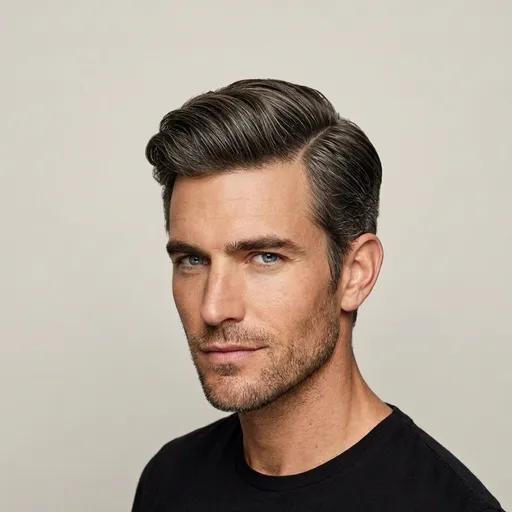
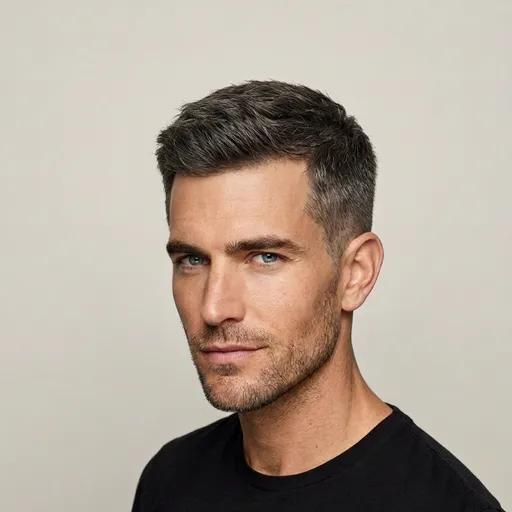
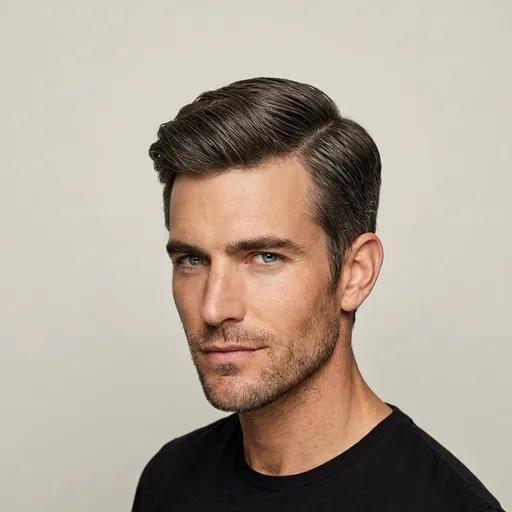
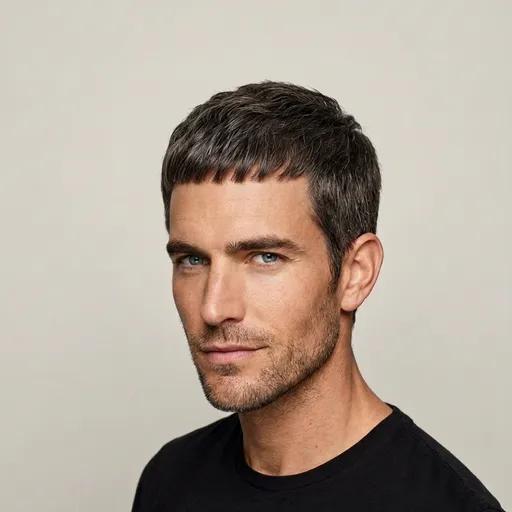
Upload one selfie and see a classic cut, a fade, or a crop on your own face in about 10 seconds. Most advice out there is a photo gallery of models a third your age. This renders the cut on your actual hairline, your actual density, gray or not.
The Cuts That Actually Hold Up
Eight classic cuts, the ones with real barbershop history rather than a trend cycle behind them. In the app, the Buzz Cut is the one men try most from this list.
| Cut | Best face shapes | Maintenance | Trim cycle |
|---|---|---|---|
| Classic Side Part | Oval, Round, Heart | medium | ~4 wks |
| Crew Cut | Oval, Round, Square | low | ~3 wks |
| Ivy League | Oval, Round, Heart | medium | ~3 wks |
| Caesar Cut | Long, Oval, Heart | low | ~3 wks |
| French Crop | Long, Oval, Heart | medium | ~3 wks |
| Textured Crop | Oval, Square, Heart | low | ~3 wks |
| Taper Fade | Oval, Heart, Long | low | ~4 wks |
| Buzz Cut | Oval | low | ~2 wks |
Thinning or Receding? Different Cut, Different Rules
These aren't the same problem and they don't take the same cut. A receding hairline moves back at the temples while the crown stays put; the fix is usually shorter length up front so there's no long line to draw attention to where the hairline used to be. Thinning is different, it's density loss across the whole top, and it responds better to an even, short length than to anything left long enough to show through. Both get their own dedicated breakdown, with cuts ranked specifically for each: haircuts for a receding hairline and hairstyles for thinning hair. Render your own photo against either concern before you guess.
Gray, White, or Salt and Pepper
Gray hair shows a clean cut better than dark hair does, more contrast, more visible definition at the edges. Salt-and-pepper, dark strands mixed with white rather than one even tone, is the easiest gray look to wear, and when it's natural it costs nothing to maintain: no dye, no bleach, no salon visit. If you're deciding whether to keep covering it or let it grow through, the full cost-and-timeline breakdown, including how it looks against a taper or a crop, is at see myself with gray hair.
Beards and Glasses Change the Calculus
With a beard
All eight classic cuts here are rated as pairing well with facial hair, which isn't true of every style in the catalog; the trend-driven cuts built for a younger crowd mostly aren't. If you're keeping the beard, the classic lane is the safer default.
With glasses
Frames sit at eye level and add weight there, so a cut with some height or texture on top balances it better than something cut flat. Upload a selfie wearing your glasses; the render keeps them on so you judge the real combination.
The One-Length Trap
The most common mistake here isn't a bad cut, it's the same cut for twenty years while the hairline and density underneath it quietly changed. A side part that worked with a full head of hair at 35 can look thin and stretched at 55 if nobody adjusted the length or the part placement to match what's actually there now. The fix usually isn't a different style, just a shorter, more current version of the same one: same side part, less length on top, a tighter taper instead of a longer blend. Render the adjusted version before you ask for it; it's a smaller change than it sounds and an easier one to describe with a photo than with words.
Not sure which of these actually fits your face shape? A free analysis narrows it to your 4 best matches. Upload one selfie to the get free AI haircut suggestions and get your 4 best matches in about 30 seconds — free.
What to Actually Say to Your Barber
Show the render, then say it in the barber's own language. Vague requests get vague results.
Classic Side Part
"Side part, medium length on top, tapered on the sides. Comb it smooth with a matte product, not a hard shine, and keep the part line natural, not razor-sharp."
Crew Cut
"Crew cut, short and tapered all around, a little texture left on top so it doesn't look flat. Low maintenance is the point, so keep it simple to style at home."
Taper Fade
"Taper fade, gradual, no hard line at the sides. I want it to still look like a classic cut, not a trend piece, just cleaner at the edges."
Caesar Cut
"Caesar cut, short straight fringe across the front. If my hairline has moved, keep the fringe a little longer so it still reads intentional, not like it's hiding anything."
Frequently Asked Questions
Is there an app to try haircuts for older men?
Yes. HaircutAI renders haircuts on your own selfie, not a stock photo of a younger model, in about 10 seconds. It runs in the browser at haircutai.app and as a free iOS app, and covers classic cuts, fades, and gray or salt-and-pepper color, all on your actual face. Free to start; the full catalog at high resolution is part of the paid plan.
What's the best haircut for a receding hairline?
Cuts that work with the hairline instead of trying to hide it, usually shorter on top with texture rather than a style that depends on a full front line. A caesar cut or a textured crop both do this well. The full breakdown, with cuts ranked specifically for a receding hairline, is at haircuts for receding hairline.
What's the best haircut for thinning hair on top?
Shorter, textured cuts read fuller than longer styles on thinning hair, the same principle as fine hair on women: less length means less contrast between where the hair is dense and where it isn't. A crew cut or a taper fade both minimize that contrast. The dedicated guide is at hairstyles for thinning hair.
Do older men need a different haircut than younger men?
Not structurally, the same classic cuts work at any age, but the trend-driven styles built for a younger crowd, like a curtain fringe or a two-block cut, don't carry the same weight on a more mature face. What tends to hold up is the opposite: side parts, crew cuts, tapers, cuts with real barbershop history behind them. 8 of the 8 cuts curated here also pair well with a beard, useful since gray or salt-and-pepper facial hair reads differently than a clean-shaven jaw.
How do I pick between over-50 and over-60 haircut advice?
Treat the split as a starting point, not a rule. Men in their 50s are more often still coloring and want something that still reads sharp; men past 60 more often prioritize the lowest possible daily effort, which usually means shorter and simpler. Your actual hairline, density, and preference matter more than the decade, and the render settles it either way.
Does gray or white hair change which haircut works?
Not the shape, but it changes contrast. Gray and white hair show texture and definition more clearly than dark hair does, so a clean taper or a crisp side part reads sharper on gray hair than it would on brown. If you're weighing letting the color go at the same time as the cut, the full comparison is at see myself with gray hair.
Can I see the haircut with my glasses on?
Yes. Upload a selfie wearing your glasses and the render keeps them on, so you can judge the cut and the frames together instead of guessing how they'll interact. Frames add visual weight at eye level, which is worth factoring into a cut, especially a shorter one that exposes more of the face.
How often should an older man get a haircut?
The low-maintenance cuts on this page, a crew cut, a caesar cut, a buzz cut, hold their shape for about 2-3 weeks before they need a trim. The medium-maintenance ones, a side part or an ivy league, stretch closer to 4-5 weeks. If you're going longer than that between visits and the cut still looks the same as day one, it's probably grown past its shape rather than staying in it.
See It on You First
One selfie, under a minute, your own hairline wearing the cut. Know before you sit in the chair.