

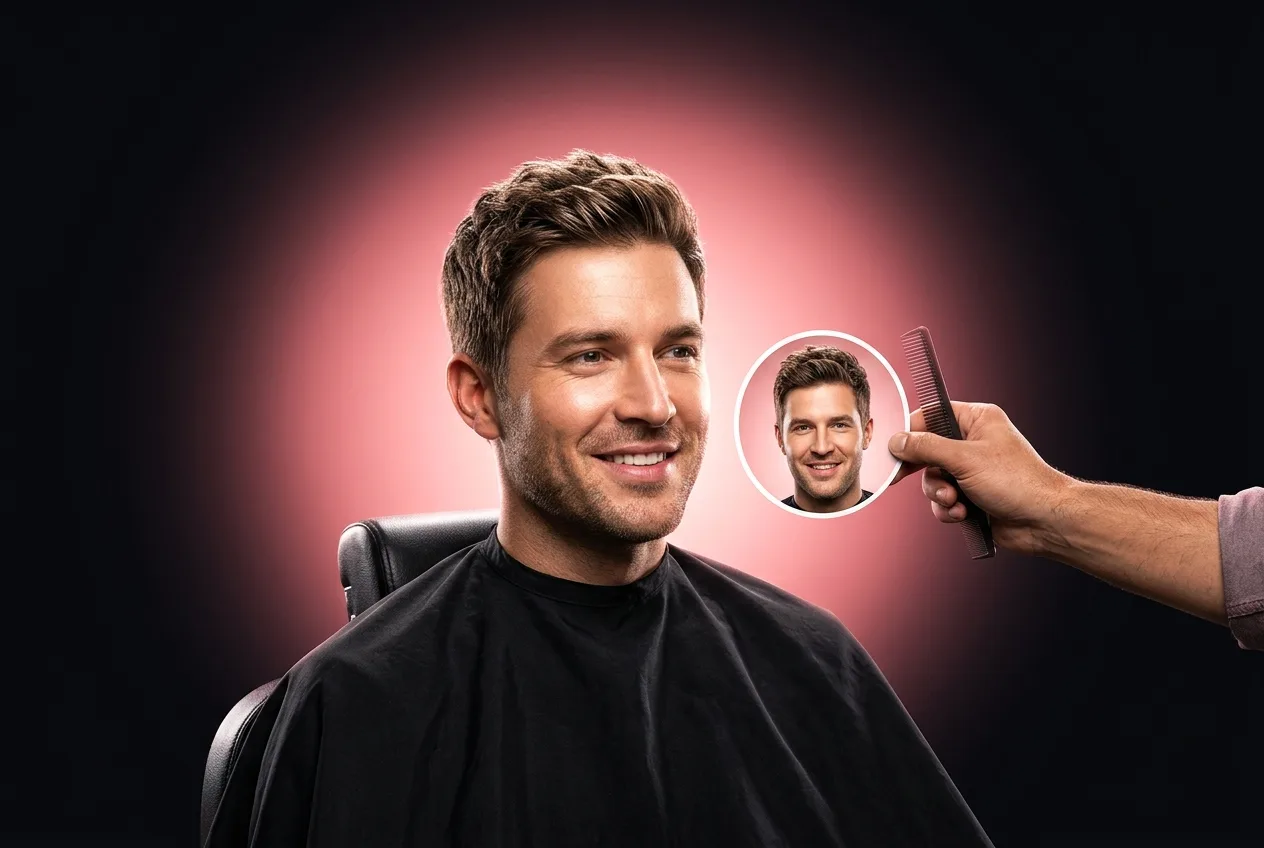
Pictures to Show Your Barber: Bring Your Own Face
The picture that gets you the best haircut isn't a photo of a celebrity. It's a photo of you already wearing the cut. Bring that, and your barber stops guessing how the style adapts to your hairline and your face, because the guesswork is already done.
Why a Stranger's Photo Backfires
A photo of a celebrity or a stranger shows a cut on a head that isn't yours: a different hairline, different density, often a different face shape entirely. Your barber has to translate all of that onto you, mentally, in about thirty seconds.
That translation is where most disappointing haircuts start. Not bad scissors, a bad guess. The exact same cut can look completely different once it meets your actual hairline and the way your hair naturally falls.
A photo of your own face wearing the cut skips that guesswork. The adaptation is already done. Your barber just has to match it.
What to Actually Bring
Four things worth having in your camera roll before you sit down, and why each one earns its place:
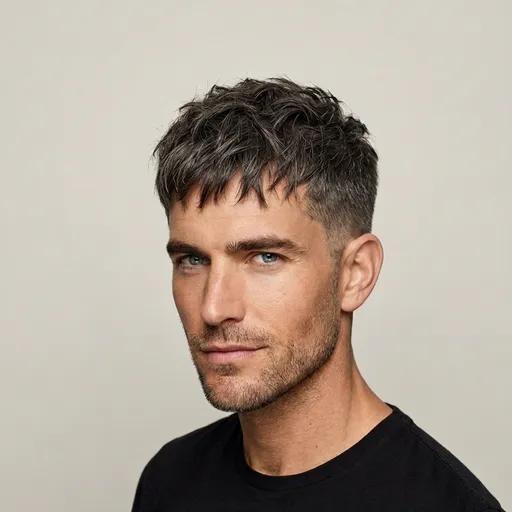
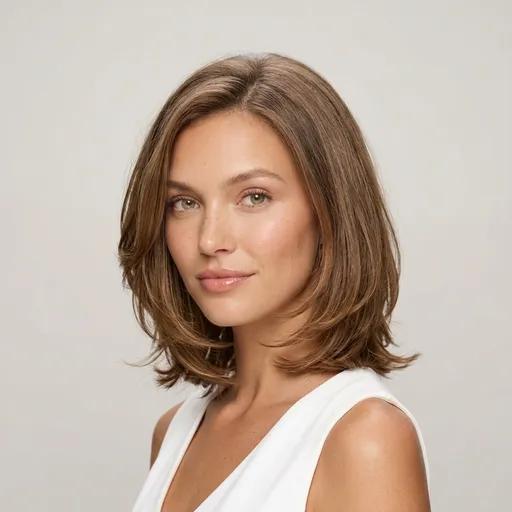
| Bring this | Why it works |
|---|---|
| A render of yourself wearing the cut | Skips the "how does this translate to my face" guesswork entirely |
| The cut's name, if you know it | Gives your barber a mental filing system even with a photo in hand |
| A second angle or length reference | Covers what a single front-facing photo can't show |
| Nothing you're lukewarm about | A cut you're 60% sure about is a cut you'll ask to redo |
One thing to skip: a photo of a hair texture very different from yours, without saying so out loud. A straight-hair reference on curly hair needs a sentence of context, not silence.
The Words That Remove the Guesswork
A photo does most of the work. These few phrases close the gap it leaves behind:
| Situation | What to say |
|---|---|
| Length | Ask for it in inches off, not "a little" or "a lot." |
| Fringe or bangs | "Eyebrow-skimming" or "above the brow," and whether it's cut wet or dry. |
| Layers | "Internal layers, keep the perimeter blunt" for shape without a choppy edge. |
| Buzz cuts and fades | Guard numbers do the talking here. See our buzz cut guard chart for the full list. |
| Unsure of the words | "Cut it dry first if my texture matters" works for anyone with waves or curls. |
One Photo Isn't Always Enough
A selfie-based render shows your face straight on. It won't show you the back of your head, and it can't fully capture how a cut moves once gravity and your real hair weight take over.
Two easy fixes: hold your hair to the length you're imagining and photograph that from the side, and describe the back the way you'd describe the front, in inches or guard numbers, not adjectives. The render handles the hardest part to picture. You still have to cover the part a front camera can't reach.
Save It Before You Sit Down
Make the photo before your appointment, not in the waiting room. Save it to your camera roll, and pull it up the moment you sit in the chair, before "just a trim" quietly becomes the whole conversation.
One scenario worth planning for: your barber looks at the photo and says it won't work exactly like that on your hair. That's not a rejection, it's information. Ask what would get closest, and specifically why it changes, texture, density, or growth pattern usually explains it.
Haven't settled on the exact cut yet? Upload one selfie to the AI haircut finder and get your 4 best matches in about 30 seconds — free.
Frequently Asked Questions
What's the best photo to bring to a haircut appointment?
A clear, well-lit photo of the exact cut you want, ideally on a face similar to yours, or better, a preview of that cut already on your own face. The second option removes the biggest source of miscommunication: how a style translates from someone else's features to yours.
Should I show my barber a picture of a celebrity?
You can, but treat it as a starting point, not the exact target. A celebrity's hairline, density, and face shape are rarely close to yours, so the same cut may need real adjustment to look the same way on you. Ask your barber directly what they'd change, rather than assuming the photo translates exactly.
Can I bring an AI-generated preview of myself instead of a real photo?
Yes, and it's a better reference than most people bring in. HaircutAI renders a photo of your own face wearing the cut you're considering in about 10 seconds, which is the kind of reference that removes guesswork instead of adding it.
What if I don't have a reference photo at all?
Describe the cut in specifics your barber can act on: length in inches, not adjectives, what you want shorter, what you want left alone, and one thing you disliked about your current cut. A specific description beats a vague photo. A specific photo beats both.
How many photos should I bring?
One good one beats three vague ones. A second angle, like a length reference from the side or back, is a useful addition, but don't hand your barber a mood board. One clear target photo plus a sentence about what's different from your current cut is enough.
Do barbers actually prefer photos over descriptions?
Most do, because a photo removes an entire round of interpretation. Words like "short" or "textured" mean different things to different people. A photo doesn't. The only photo that removes even more guesswork is one where the cut is already shown on a face and hairline like yours.
What if my barber says the photo won't work for my hair?
That's a normal, useful response, not a rejection. Ask specifically what would change and why, since the answer usually comes down to your texture, density, or growth pattern rather than the cut being impossible. If they instead ignore the photo and go straight to their usual cut, say something before the clippers start, not after.
Bring Proof, Not a Guess
One selfie, one render, one photo your barber can actually work from.